

Recent digital transformations have been changing many processes within companies, one of which is the implementation of automated tools to deal with changes in customer behavior in relation to digital service.
The shopping and customer service experience remains one of the most important factors for consumers. In other words, it is not enough to simply adopt digital channels: they must be used strategically, ensuring agility, clarity, empathy, and real problem solving.
Currently, the big challenge is to win over the 4.0 consumer: connected, immediate, informed, and with little tolerance for bureaucratic processes or poor customer service.
It is precisely in this context that digital customer service becomes one of the main allies of companies, bringing together tools, data, and automation to deliver more efficient support.
With that in mind, we will show you what a digital call center is, its main tools, and how to implement a truly efficient call center. Check it out!
What is a digital service center?
A digital service center is the set of interactions between companies and people that take place through digital channels and technologies. It ranges from customer support to institutional, internal, or automated service, changing how companies relate to their customers.
This model is directly linked to the concept of SAC 4.0, in which the company guarantees a presence on various channels, such as chats, social networks, messaging apps, email, and other means.
The logic is simple: modern consumers value omnichannel service, want quick responses, and, in most cases, prefer to resolve everything through digital channels.
This type of service is marked by the use of technologies such as AI, conversation automation, chatbots, and other solutions that allow for scaling contact without losing efficiency.
When these different channels work in an integrated way, we talk about an omnichannel experience: the customer can start the contact on social media, continue through the website chat, and finish on WhatsApp, without having to repeat everything from scratch.
In general, this integration is made possible by a digital customer service platform, which centralizes channels, automates processes, and streamlines customer service.
In practice, the digital customer service center combines the best of both worlds: human service and artificial intelligence, with the goal of making contacts faster, more practical, and more satisfying.
Digital customer service tools
By implementing an omnichannel digital customer service platform, the company seeks to offer complete support, integrating channels such as telephone, forms, live chat, self-service, bots, and much more. Among the most important tools are:
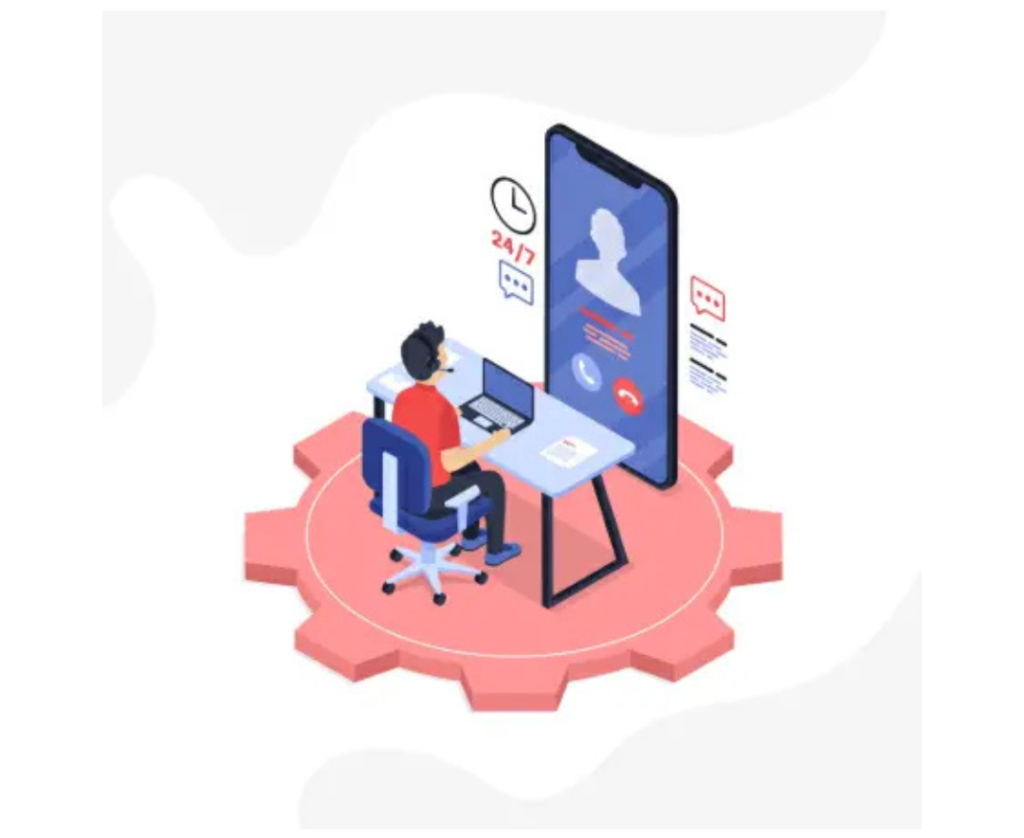
Online Chat
Customer service chat is one of the digital channels that generates the most satisfaction. Surveys such as those conducted by Invesp show that most consumers consider online chat to be one of the best ways to talk to a company.
This channel can work in two main ways:
- Human service: The customer talks directly to an attendant, who answers questions, records requests, and guides the user in real time. This is the traditional chat model, ideal for cases that require more careful analysis or greater empathy.
- Chatbot: A chatbot is a virtual assistant that can use artificial intelligence and predefined scripts to automatically answer frequently asked questions. It learns with use, can be trained to handle specific questions, and provides 24/7 service.
It is essential to make it clear to the user when they are interacting with a robot and offer the option of transferring to a human attendant whenever the subject is more complex or requires personalized analysis.
Email remains an important channel within digital customer service, especially when it comes to more detailed issues or those that require formal registration. It allows for secure exchanges, can be automated to send standard responses, and can be segmented for specific campaigns.
Social media
WhatsApp, Facebook, Instagram, LinkedIn, Messenger, Telegram, and other platforms are no longer just entertainment spaces; they have become relevant channels for relationships between brands and consumers.
In addition to serving as a showcase for products and services, they allow companies to monitor what the public is saying about the brand, interact with compliments, questions, and complaints, and respond quickly to public statements.
According to surveys such as those conducted by Sercom, 64% of Brazilian customers prefer customer service via WhatsApp. It is not uncommon for consumers to turn to social media to express dissatisfaction when they cannot find answers on other channels, which reinforces the importance of monitoring and responding in these spaces.
Advantages of the digital customer service center
Understanding the concept of digital customer service is only the first step. To decide to invest in a platform, it is important to know the concrete advantages that this model can generate for the business.
Unifies communication in one place
A digital customer service platform centralizes all messages, histories, and interactions with customers in a single environment, regardless of the source channel.
This facilitates customer service management, prevents loss of information, and allows any attendant to quickly access contact history.
As a result, customer service becomes more agile, consistent, and aligned with the customer’s context.
Reduced costs
Task automation significantly reduces the need for large teams dedicated solely to repetitive tasks. Investing in chatbots can generate operational savings in both payroll and rework and recurring errors.
Automated processes tend to be more standardized and, when properly configured, reduce human error, which contributes to greater efficiency and smarter use of resources.
Customer satisfaction
A well-structured digital call center has a direct impact on customer perception. Quick responses, the ability to resolve everything through the preferred channel, and the ease of asking questions or submitting requests increase the level of customer satisfaction.
By implementing, for example, a chatbot integrated with WhatsApp, your customers can get support quickly, without the need for phone calls or long waits. This convenience strengthens the bond with the brand and increases the chances of loyalty.
More productivity
Automating repetitive activities and concentrating channels into a single system frees up support staff time for more strategic tasks, such as data analysis, process improvement, and resolving complex cases.
This allows the team to act in a more consultative rather than just operational manner, which contributes to higher quality service.
Metrics analysis
Because it is digital, this type of service allows you to track metrics in real time: number of calls, average response time, resolution rate, customer satisfaction, among others. This information is essential for identifying bottlenecks, adjusting routes, and continuously improving operations.
Good customer service tools generate detailed and customizable reports, helping management focus on the indicators that make the most sense for that business’s strategy.
How to set up a digital call center?
For digital customer service to be one of the company’s strategic pillars, it takes planning, long-term vision, and alignment with the organizational culture. Here are some essential steps:
1. Know your audience
Before any implementation, analyze the scenario:
- How is the market and your segment doing?
- Who are your current customers?
- What are their main pain points, needs, and expectations?
- What channels do they use most to communicate with companies?
- How does the customer service journey work in your organization today?
These answers help you design a customer service strategy that is consistent with the reality of your audience and the company’s objectives.
2. Define your channels
Based on customer preferences and business characteristics, choose the digital channels that will be part of your customer service center: WhatsApp, website chat, email, social media, VoIP phone, among others.
The most important thing is to invest in the channels where your audience really is and where you can deliver fast, efficient, and standardized service.
3. Invest in a good customer service tool
The choice of platform is crucial. Look for a complete and intuitive solution such as JivoChat, which allows the integration of different channels and offers features such as:
- unified conversation management;
- automation and chatbot support;
- performance reports and dashboards;
- integration with CRM, internal systems, and other tools.
Also check the quality of the available integrations, data storage security, and support offered by the provider. This technological foundation will underpin your digital customer service strategy.
4. Invest in humanized customer service
Even with a lot of automation, customer service needs to be humanized, maintaining empathy, politeness, and active listening. This applies both to interactions with human agents and to bot messages, which can be written in a more friendly way.
Customers want to be treated as individuals, not numbers. Humanization involves using the person’s name, demonstrating understanding of the situation, admitting mistakes when necessary, and showing a willingness to resolve issues.
5. Keep an eye on the results
Regularly monitoring digital service indicators is essential to understanding what is working and what needs to be adjusted. Define key metrics, such as:
- average response time;
- first contact resolution rate;
- satisfaction level (CSAT, NPS);
- volume of service requests per channel;
- individual and collective team performance.
Use this data to compare results over time, identify trends, and inform improvement decisions.
6. Monitor your service channels
Even if all channels are integrated into an omnichannel strategy, it is important to monitor the performance of each one individually. This makes it easier to identify specific problems and allows for targeted actions.
7. Train your customer service team
No technology can replace a well-prepared team. Invest in ongoing training so that employees:
- master the use of tools;
- understand internal processes;
- have clarity about the company’s strategy and positioning;
- keep up with industry trends and best practices in customer service.
An engaged, valued, and well-trained team tends to deliver much higher results in productivity, quality, and empathy.
In summary, building an efficient digital customer service center requires planning, careful selection of tools, focus on data, and, above all, attention to the customer experience. When properly implemented, this model improves internal processes, strengthens the relationship between brand and consumer, and contributes directly to the growth and consolidation of the business.
Have you learned what a digital call center is?
We hope this article has helped you understand the importance of a digital call center in a scenario where modern consumers are hyperconnected, demanding, and prioritize agility and effective problem solving across all channels.
To build a robust omnichannel solution, JivoChat stands out as a multichannel communication platform that unifies multiple touchpoints in a centralized and intuitive dashboard.
The tool allows you to install a chat directly on your website, ensuring real-time service for visitors, with advanced features such as personalized proactive invitations and automatic contact data capture.
Chatbots operate 24 hours a day, answering common questions, intelligently qualifying leads, and transferring complex conversations to human agents when necessary.
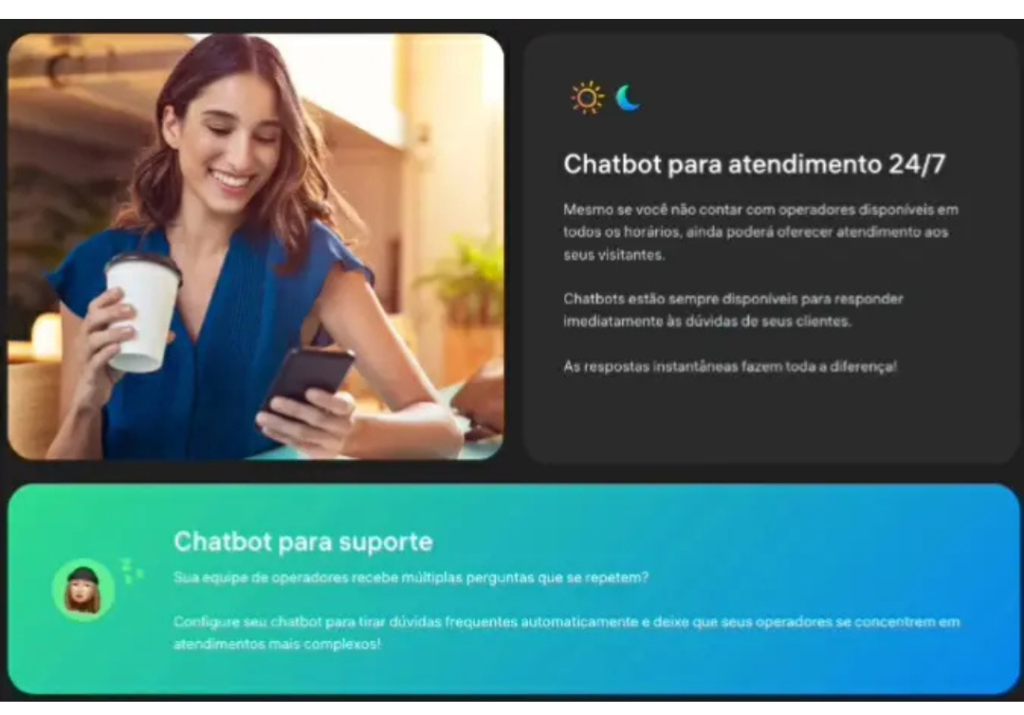
JivoChat’s AI Agent represents a technological advantage: it analyzes conversations in real time, suggests accurate contextual responses, and automates repetitive flows, drastically reducing average service time and freeing up staff for more complex strategic cases.
Integration with WhatsApp Business centralizes all conversations in the app, offering professional features such as mass messaging, behavior-targeted campaigns, and direct connection to CRM systems, optimizing complete customer relationship management.
By adopting JivoChat, your company completely transforms its customer service strategy, creating an authentic and fluid omnichannel experience. Try all features free for 14 days or use the free version, which supports up to five simultaneous operators.